

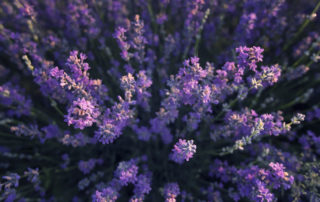
Lowering Glutamate | Lavender
Lavender- protects against glutamate induced neurotoxicity Inhalation of lavender was also noted to inhibit convulsion induced by pentylenetetrazol, nicotine, or electroshock in mice [33]. Linalool, one of the major components of lavender oil, has been shown to inhibit the convulsion induced by pentylenetetrazol and transcorneal electroshock in different animal models [34, 35], an effect that may induce via a direct interaction with the glutamatergic NMDA subreceptor as well as GABAA receptors [36]. The neuroprotective effect of lavender oil on cerebral ischemia/reperfusion injury [...]
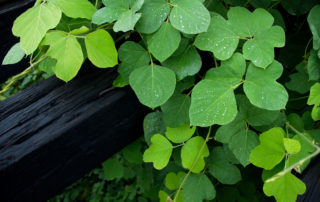
Lowering Glutamate | Kudzu (Puerarin)
Kudzu (aka Puerarin)– If you've driven along the highway in the south, you've likely noticed this highly invasive Japanese vine covering nearly everything. From billboards to abandoned buildings, it is everywhere! In fact, my husband has battled it for so long, that he refers to himself as the Kudzu King, complete with his own pair of "Kudzu King" coveralls. It wasn't until our journey with our son, that I started to develop a better appreciation for this plant. Kuduz is [...]

Lowering Glutamate | Hesperidin Flavonoid
Hesperidin Flavonoid (found in citrus peel)- neuroprotective against glutamate excitotoxicity. “The citrus flavonoid hesperidin exerts neuroprotective effects and could cross the blood-brain barrier. Given the involvement of glutamate neurotoxicity in the pathogenesis of neurodegenerative disorders, this study was conducted to evaluate the potential role of hesperidin in glutamate release and glutamate neurotoxicity in the hippocampus of rats.)””These results demonstrate that hesperidin inhibits evoked glutamate release in vitro and attenuates in vivo KA-induced neuronal death in the hippocampus. Our findings indicate [...]
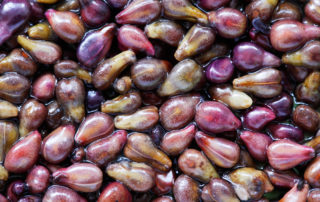
Lowering Glutamate | Grape Seed Extract
Grape Seed extract– is a popular antioxidant and inhibits glutamate induced cell death. “Grape seed proanthocyanidin extract inhibits glutamate-induced cell death through inhibition of calcium signals and nitric oxide formation in cultured rat hippocampal neurons.” “All these data suggest that GSPE inhibits 0.1 mM [Mg²?]o- and oxygen glucose deprivation-induced neurotoxicity through inhibition of calcium signals and NO formation in cultured rat hippocampal neurons.” https://www.ncbi.nlm.nih.gov/pubmed/21810275 “Polyphenols extracted from grape seeds are able to inhibit amyloid-beta (Abeta) aggregation, reduce Abeta production and protect [...]
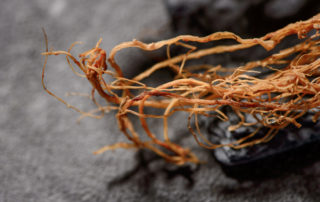
Lowering Glutamate | Ginseng
Ginseng– inhibits inflammation caused by microglial/immune activation and therefore lower glutamate and cytokine levels (microglia are activated as a first step in immune response and they signal additional glutamate/cytokines/etc). “Ginseng extracts also inhibit immunoexcitotoxic activation of microglia, an important factor in preventing the destructive process of Alzheimer’s disease. In fact, components in American ginseng, Korean red ginseng, and Panax ginseng all inhibit inflammation caused by microglial activation. Regulation of microglial activity is critically important in brain protection because these specialized immune cells can either be [...]
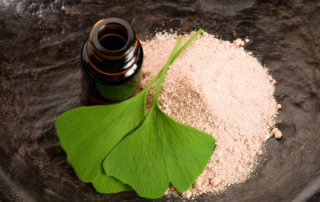
Lowering Glutamate | Ginko Biloba
Gingko biloba- Neuroprotective effects of Ginkgo biloba extract. “Antagonistic effects of extract from leaves of Ginkgo biloba on glutamate neurotoxicity” https://www.researchgate.net/publication/13217791_Antagonistic_effects_of_extract_from_leaves_of_Ginkgo_biloba_on_glutamate_neurotoxicity “The effects described mostly in animals include those on cerebral blood flow, neurotransmitter systems, cellular redox state and nitric oxide level. https://www.ncbi.nlm.nih.gov/pubmed/14523543 “Molecular evidence of the neuroprotective effect of Ginkgo biloba (EGb761) using bax/bcl-2 ratio after brain ischemia in senescence-accelerated mice, strain prone-8.” https://www.ncbi.nlm.nih.gov/pubmed/16677616
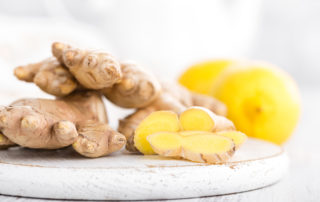
Lowering Glutamate | Ginger
Ginger- We try to use fresh ginger root as often as possible. However, any leftover ginger can be chopped and stored in an airtight container in the freezer for months. “From these results, we can say that the ginger extract has a neuroprotective role against monosodium glutamate toxicity effect.” https://www.ncbi.nlm.nih.gov/pubmed/19579948
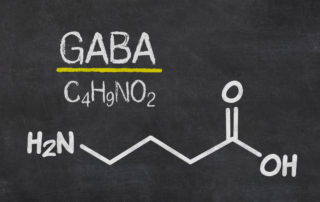
Lowering Glutamate | GABA
GABA (Gamma-Aminobutyric Acid)– Many believe that taking GABA can be a quick fix to resolve underlying glutamate problems, but unfortunately, for some, this is not the case. It is my understanding that to increase GABA, one must work to lower glutamate and increase beneficial gut bacteria. Sprouted or germinated rice (especially black rice) is often recommended to increase GABA. The sprouting/germination process increases the naturally occurring levels of GABA, but due to the protein degradation that occurs in this process, it [...]
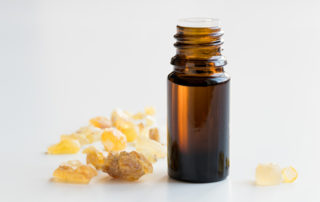
Lowering Glutamate | Frankincense
Frankincense- While some of these studies are geared towards arthritis, they indicate that frankincense (from the Boswellia genus) can be protective against glutamate, cytokine damage, unregulated calcium and help with neuroinflammation. It can even help against the spread of cancer. We personally saw increased speech when we started applying diluted frankincense essential oil to the back of our sons neck before bed. Boswellia serrata Protects Against Glutamate-Induced Oxidative Stress and Apoptosis in PC12 and N2a Cells https://www.ncbi.nlm.nih.gov/pubmed/27494534 Boswellia frereana (frankincense) suppresses cytokine-induced [...]
Lowering Glutamate | Curcumin (Turmeric)
Curcumin (Turmeric) – Protects against glutamate and inhibits glutamate release. “Curcumin protects against glutamate excitotoxicity in rat cerebral cortical neurons by increasing brain-derived neurotrophic factor level and activating TrkB” https://www.ncbi.nlm.nih.gov/pubmed/18420184 “Curcumin Protects Neurons from Glutamate-Induced Excitotoxicity by Membrane Anchored AKAP79-PKA Interaction Network” https://www.hindawi.com/journals/ecam/2015/706207/ “Curcumin Protects against Monosodium Glutamate Neurotoxicity and Decreasing NMDA2B and mGluR5 Expression in Rat Hippocampus.” https://www.ncbi.nlm.nih.gov/pubmed/27529496 “Curcumin attenuates glutamate neurotoxicity in the hippocampus by suppression of ER stress-associated TXNIP/NLRP3 inflammasome activation in a manner dependent on AMPK” http://www.sciencedirect.com/science/article/pii/S0041008X15000927 “Curcumin inhibits the increase of [...]