

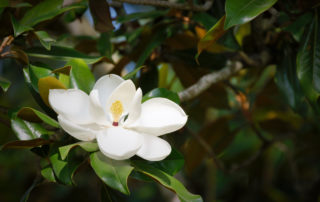
Lowering Glutamate | Honokiol (Magnolia Bark)
Honokiol (connected to magnolol) also known as Magnolia Bark Extract , is rapidly gaining in popularity due to its ability to help relive the symptoms many aliments associated with excess glutamate. Honokiol helps to convert excess glutamate into GABA. While it is primarily known to help combat cancer, inflammation, depression, sleep disturbances, EBV, Lyme and manage pain, it also carries quite a few risks, especially when recreationally misused. Please do your own research and consult with your medical provider before [...]
Lowering Glutamate | Melatonin
Melatonin- Melatonin is often just associated with sleep and there is a huge connection between sleep disturbances and an imbalance in glutamate (excites) and GABA (calms). Our children lean towards excess glutamate which will make them more prone to sleep disturbances. The smallest amount of glutamate would wake my son for 2-3 nights. Melatonin and glutamate have a complicated relationship. It appears as though melatonin protects against excess glutamate AND glutamate inhibits melatonin (fluoride and aspartate/aspartame do as well). Some [...]
Lowering Glutamate | Magnesium
Magnesium- In our experience, magnesium has made the most significant impact in reducing our symptoms within a flare. Magnesium protects against glutamate damage, sits on the NMDA glutamate receptor, calms cells, helps to raise GABA, improves motility, is a potent antioxidant, increases glutathione, and can help to resolve many various health issues. It is also my understanding that one will quickly burn through magnesium due to neuron firing when in an excitotoxic state (or a flare). Low magnesium is also associated [...]
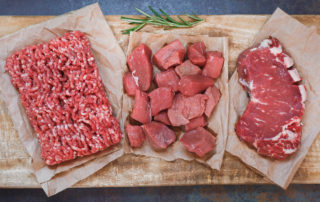
Meat & Refrigerated Items
I feel like I need to include every sort of disclaimer here because some of these foods are not perfect, and I am sure many will find reasons to criticize them. However, I will absolutely admit how hard it can be to switch your family to a whole food-based diet when coming from the standard American diet. While some of these foods are not ideal and can be very inflammatory due to poor quality oils, sugar, non-organic, high in x,y,z, [...]
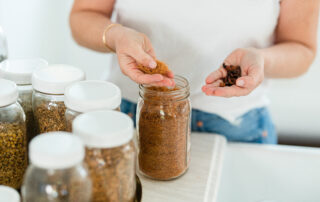
Condiments, Herbs & Spices
I feel like I need to include every sort of disclaimer here because some of these foods are not perfect, and I am sure many will find reasons to criticize them. However, I will absolutely admit how hard it can be to switch your family to a whole food-based diet when coming from the standard American diet. While some of these foods are not ideal and can be very inflammatory due to poor quality oils, sugar, non-organic, high in x,y,z, [...]
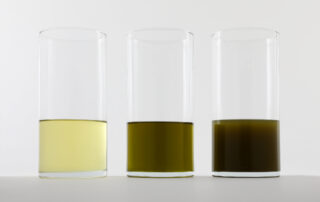
Fats, Oil, Vinegar & Alcohol
I feel like I need to include every sort of disclaimer here because these foods are not perfect, and I am sure many will find reasons to criticize them. However, I will absolutely admit how hard it can be to switch your family to a whole food-based diet when coming from the standard American diet. While these foods are not ideal and can be very inflammatory due to poor quality oils, sugar, non-organic, high in x,y,z, etc., they may help [...]
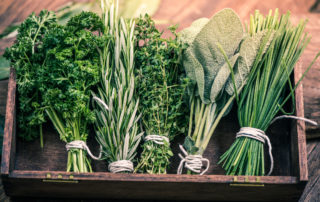
Lowering Glutamate | Luteolin Flavonoid
Luteolin- A type of flavonoid found in celery, chamomile, carrots, celery, parsley, thyme, oregano, sage, basil, peppermint, artichoke and spinach is known to reduce brain and systematic inflammation by CALMING MICROGLIAL CELLS and therefore lower glutamate and cytokine levels (microglia are activated as a first step in immune response and they signal additional glutamate). Mixing these food sources with coconut oil or olive oil will help increase absorption. It is also a strong inhibitor of mast cells and helps autoimmune disorders with the [...]
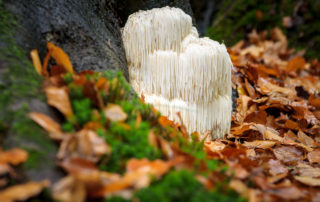
Lowering Glutamate | Lion’s Mane
Lion’s Mane– Reduces neuronal excitability from glutamate “Extract suppressed the excitation of neurons caused by L-glutamic acid application. The assumption is made that the H. erinaceus extract contains substances that may activate receptors that cause an inhibition of spike activity. The inhibitory effect of extract was not induced by GABA and serotonin receptor activation or activation of M- and N-cholinoreceptors. Inhibition of spike activity was caused by hyperpolarization of the neuronal membrane during extract application.” http://www.dl.begellhouse.com/journals/708ae68d64b17c52,0d49dda96a2a7147,504922782f5fa5ea.html
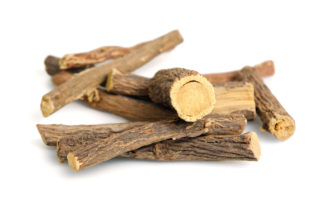
Lowering Glutamate | Licorice Root (Glycyrrhizin)
Licorice Root (Glycyrrhizin) high in Carbenoxolone – inhibits glutamate release from microglia! “Liquiritigenin effectively reduced glutamate-induced early apoptosis through inhibition of Ca(2+) influx, intracellular reactive oxygen species (ROS) production, and lipid peroxidation.” https://www.ncbi.nlm.nih.gov/pubmed/24012889 “These observations suggest that glycyrrhizic acid may be of therapeutic value for the prevention of cerebral damage elicited by the glutamate.” http://europepmc.org/abstract/med/16952351 Thus, blockade of glutamate release from activated microglia with CBX or DON may be an effective therapeutic strategy against neurodegeneration in MS. https://www.ncbi.nlm.nih.gov/pubmed/19212100
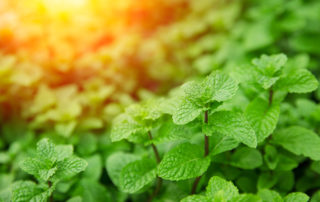
Lowering Glutamate | Lemon Balm
Lemon Balm (Melissa officinalis L)- increases GABA which helps lower glutamate and establish balance between the two neurotransmitters. “These results suggest that MOE increases cell proliferation, neuroblast differentiation and integration into granule cells by decreasing serum corticosterone levels as well as by increasing GABA levels in the mouse DG.” https://www.ncbi.nlm.nih.gov/pubmed/21076869